


Building websites in 2026 is no longer just a technical or design operation, but a complete business move aimed at producing a clear result: quality inquiries and new customers. Despite this, many businesses still approach a website building project with an old-fashioned approach, where the emphasis is on visibility, design trends or system selection, instead of the central question - how the website will actually contribute to business growth.
This gap between expectation and actual result is the main reason why many sites do not generate inquiries. The site goes live, sometimes even receives traffic, but does not function as an effective marketing tool. To understand how to build a website that really works, it is necessary to look at the process in a broader way and to understand the principles that differentiate between an existing website and a website that produces results.
Website planning starts with understanding the customer and not choosing a technology
One of the most common mistakes in the website building process is a technical start: choosing a platform, template or design direction, and only then trying to adapt the content and structure to what has already been chosen. This approach leads to websites that look good but are not connected to the real needs of the target audience.
A correct process starts with a thorough understanding of the customer. Who is the target audience, what is he looking for, what motivates him to action, and what questions arise for him before making a decision. A user looking for website building service is not looking for a "website", but a business solution. He wants to understand who can provide him with a result, how the process works and what he will get in the end.
When the site does not answer these questions clearly, a feeling of uncertainty is created that leads to abandonment. Therefore, already in the planning phase, the main message, the target audience and the desired type of references must be defined, and only then move to the structure and design phase.
Match to search intent: the basis for organic promotion and conversions
One of the critical factors for the success of a website is an exact match to the user's search intent. When a surfer searches for a phrase like "building websites for businesses" or "website development company", it comes with a clear expectation of a certain content. If the page he enters does not meet this expectation, the chance that he will continue browsing the site or make an inquiry decreases significantly.
Match to search intent isn't all about combining keywords. It's about a deep understanding of what the user wants to see: what questions he asks, what concerns he has, and what information will make him feel like he's come to the right place. A properly optimized page presents the service clearly, explains the process, presents advantages and differences, and leads the user naturally to the next step.
When there is a complete match between the search and the content, the site not only ranks better in Google, but also manages to convert traffic into actual inquiries.
Correct website structure: not a collection of pages but a system that works together
Many of the sites are built as a collection of standard pages: home page, about page, services page and contact page. Although this structure is common, it does not necessarily serve the business purpose.
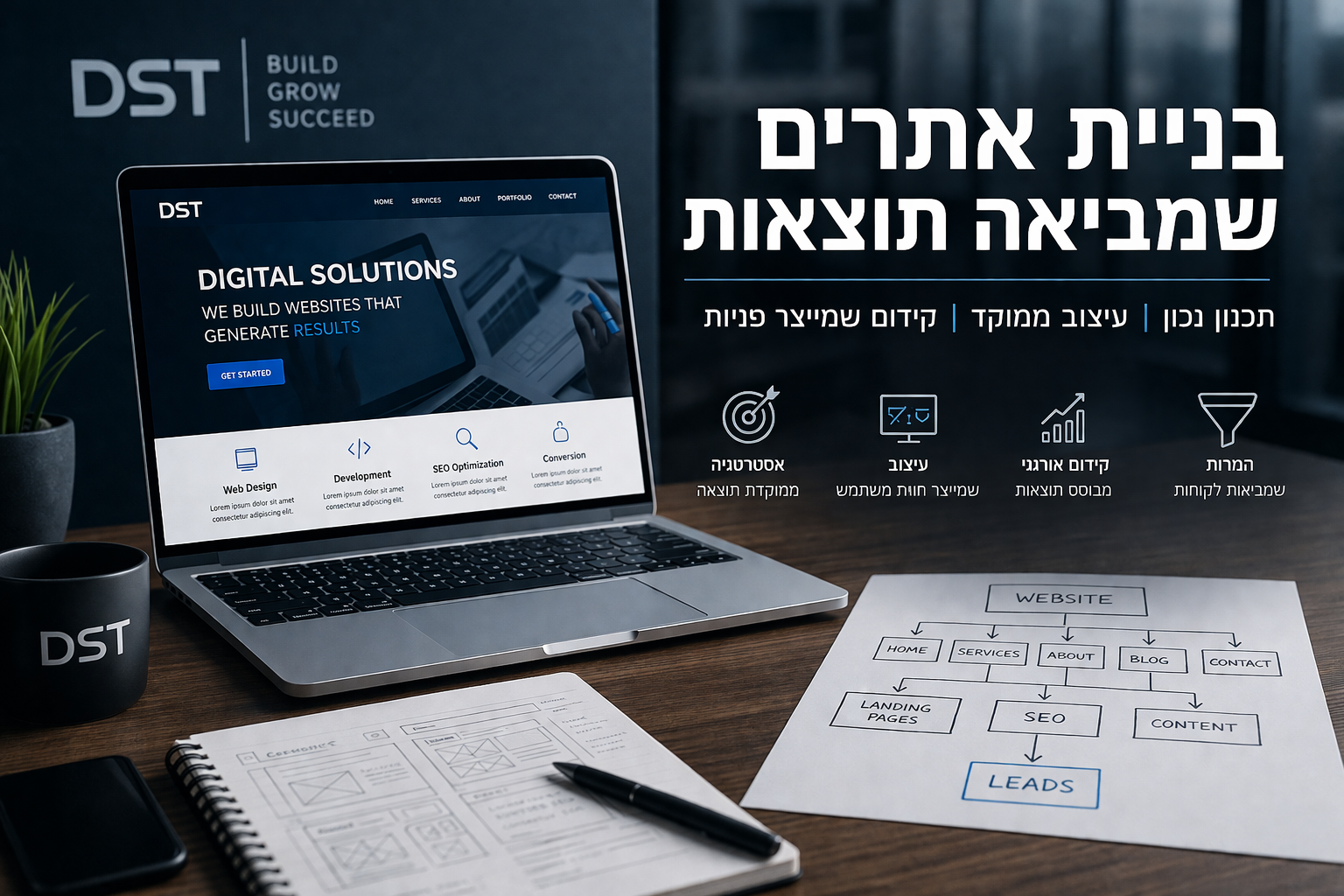
A website that generates inquiries is structured more strategically. Each page is designed for a specific search phrase and a different stage in the user's decision-making process. Main pages focus on specific services, while content pages support expanding information and building authority.
In addition, it is important to understand the role of internal links. A correct link between pages not only helps organic promotion , but also creates a clear browsing path that leads the user from the entry point to the contact.
User experience that leads to action
User experience is not limited to beautiful design or advanced animations. The main goal of UX is to lead the user to action in a clear and convenient way. When a user enters a page, they need to quickly understand where they are and what the next step is.
An effective page is built as a logical sequence: it begins with the presentation of the service and value, continues with deepening the understanding and presentation of benefits, including proofs such as projects or recommendations, and finally leads to action through a clear call to contact.
When this sequence is broken, or when the user has to "guess" What to do, the chance of appeal decreases. Therefore, every element on the page - text, button, image - should serve this purpose.
The relationship between SEO, content and development
One of the common mistakes is to treat organic promotion as a separate step that comes after building the website. In practice, SEO is an integral part of the infrastructure. A website that is not built correctly in terms of structure, titles, loading speed and code, will have difficulty reaching high positions.
At the same time, even quality content is not enough if it is not correctly integrated into the website structure. It is the combination of development, content and SEO that produces a strong website. When the three components work together, the website not only looks good, but also functions as an effective marketing tool.
Authority and trust: why users choose you
Even if the site is well built and optimized for search intent, the user still needs a reason to choose your business. This is where authority and trust come into play. Presentation of experience, previous projects, clients, recommendations and results is a central part of the process.
In addition, external links from authoritative websites also contribute to building trust in the eyes of Google and in the eyes of users. However, it is important to understand that authority is not only built through links, but also through quality and consistent content that displays knowledge and experience.
A site as an ongoing infrastructure
One of the most important points is the understanding that a website is not a one-time project. After going live, a process of continuous improvement begins. Adding content, strengthening existing pages, improving user experience and optimizing for organic promotion are an integral part of the process.
Businesses that continue to invest in the site over time enjoy a gradual growth in traffic and inquiries, while others remain with a site that does not develop.
Summary
Building websites in 2026 requires a broader view of the process. It is not just about creating a website, but about building a marketing system that aims to produce results. When the website is designed correctly, optimized for search intent, built intelligently and continues to develop over time, it becomes a significant asset that promotes the business.
The difference between a site that does not bring in inquiries and a site that produces results is not accidental. It is the result of correct decisions from the very first step.